
Safewords 101: How the Traffic-Light System Works
A safeword is a word you both agree on before a scene that means “stop” or “slow down” — and it always works, even if the scene includes struggling, teasing or saying “no” as part of the play. Beginners skip this conversation because it feels awkward. Experienced people treat it as basic equipment, like water after the scene.
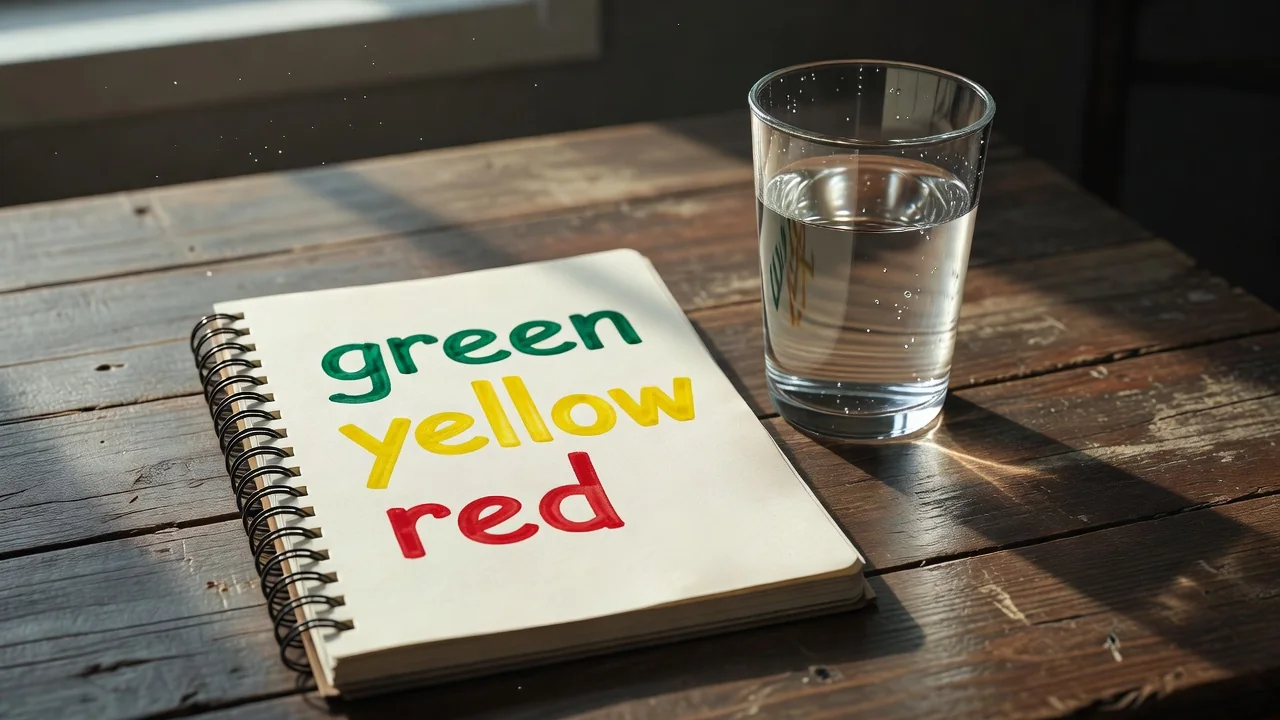
The most common teaching tool is the traffic-light system: three everyday color words instead of one emergency word. Green, yellow and red. This guide explains what a safeword is, why those three colors exist, and how to use them so both people actually feel safer — not more theatrical.
What a safeword is (and what it is not)
In ordinary life, “no” and “stop” are enough. In kink they sometimes are not. Some scenes include resistance as part of the fantasy. Some people go quiet when they are overwhelmed. Some cannot speak clearly when they are deep in sensation. A safeword sits outside the fantasy. It is not acting. It is the off switch.
A safeword is not a mood, a joke or a test of how “serious” you are. It is a shared rule: when that word is used, the other person stops the action and checks in. Nobody has to justify it in the moment. You can talk later. First you stop.

The traffic-light system, in plain language
Educators use traffic lights because almost everyone already knows what the colors mean on the road. You do not have to invent a secret password you will forget when you are shaky.
| Word | What it means | What your partner should do |
|---|---|---|
| Green | I am okay. You can continue like this. | Keep going. Do not jump to something harder unless you already agreed. |
| Yellow | Slow down, ease up, or check in. Something is off. | Stop the last action. Ask a short question. Adjust or pause. |
| Red | The scene is over. Stop everything now. | Hands off. Lights and space as agreed. Aftercare. No “one more hit”. |
Yellow is the part beginners forget. If you only have “keep going” and “full stop”, people wait too long and then slam into red. Yellow lets someone say “the left shoulder is too much” without ending the whole evening.
If speaking will be hard — a gag, loud music, going nonverbal — agree a physical signal that means yellow or red: three taps, dropping a cloth, a hand squeeze. Test it once while you are both calm, so you trust it later.
How to set this up before anyone starts
Say the three words out loud while you still have clothes on. If someone cannot say “red” in a normal voice in the kitchen, they will not say it later. That is useful information. Do not start.
Agree what happens on red: stop, blanket or space, water, no interrogation for a few minutes. Agree that yellow will be thanked, not argued with. A partner who debates your yellow is not ready to play.
- Use short words you will actually shout. “Red” works. A joke word you will be too embarrassed to use does not.
- Decide the non-verbal backup before the scene, not after someone cannot speak.
- The person leading the scene can also ask “color?” mid-way. A one-word answer keeps the channel open.
- Red can be used for any reason: pain, fear, cramp, sudden sadness, just done. No essay required.
- After red, aftercare first. The debrief waits until both of you can think.
Common mistakes
“We trust each other, we do not need a safeword.” Trust is why you have one. People who care still miss signals. A word is cheaper than a bad night.
“I did not want to ruin the mood.” Ruining the mood for thirty seconds is better than someone leaving shaken. Yellow exists so you can adjust instead of exploding the scene.
Ignoring a quiet or frozen partner because they did not say red. If someone goes silent and still, check. Ask for a color. Treat no answer as yellow at least.
What the colours are for, said in full
Green, yellow and red are not a mood board. They are the shortest sentences in the room, agreed before anyone is high on the scene, and they work even when “no” is part of the play. Practice them once while you are still clothed and bored. Bored is the point. If you cannot say red without laughing, you are not ready for the part that needs red — and that is information, not a failure of desire.